
What the 2026 Guardians case actually changed
The Cleveland Guardians prop case that broke through the summer of 2025 is the kind of story that tabloid headlines simplify and serious analysts overcomplicate. Strip both away and what’s left is a specific allegation: two pitchers manipulated specific in-game outcomes in ways that integrity monitors detected through unusual betting patterns on US sportsbooks. The MLB suspended both players and law-enforcement involvement followed.
For UK bettors who never had any direct exposure to the markets in question, the natural reaction is to scroll past it as a US legal story. That’s a mistake. The case reset how every major sportsbook globally – UK-licensed operators included – risk-manages individual-pitch and individual-event prop markets. The product you’re betting on in 2026 is structurally different from the product that existed in early 2025, and that’s worth understanding even if you don’t bet props.
What happened: timeline and roles
The contours of the case as established publicly: two Guardians pitchers, Emmanuel Clase and Luis Ortiz, were placed on non-disciplinary leave during the 2025 regular season after federal investigators flagged unusual betting patterns on micro-prop markets attached to their pitching appearances. The leave converted to formal MLB suspension after the league’s own investigation corroborated key elements of the federal flag. Federal indictments followed.
The mechanism the investigators identified was specific: bets on first-pitch-ball or first-pitch-outside-the-zone outcomes – markets where a pitcher who knows in advance how he’ll deliver a single pitch can effectively dictate the bet’s outcome. The wagers were placed by associated parties through US-based regulated sportsbooks rather than the players themselves, and the trail back to the players was established through correlated timing and account-relationship analysis.
The integrity-monitoring infrastructure that surfaced the pattern is worth knowing about. US sportsbooks operate under a framework requiring suspicious-pattern reporting to integrity vendors, who share alerts across the industry and with leagues and law enforcement. The Cleveland flag came from exactly that pipeline – not a tip or a journalist’s investigation, but the mechanical output of an automated monitoring system designed for precisely this scenario.
The federal involvement reflects the post-2018 US legal landscape, where sports-betting integrity violations cross state and federal jurisdiction. The legal sportsbook market generated $13.71 billion in revenue from $149.8 billion in handle in 2024 – that volume of legal activity creates correspondingly large incentives for integrity infrastructure, and the Cleveland case is what that infrastructure looks like when it actually fires.
Which prop markets were affected
The specific markets at the centre of the case were micro-pitch props – bets settled on the outcome of a single pitch rather than a player’s full statistical line for the game. First-pitch-ball, first-pitch-strike, first-pitch-in-the-zone, first-pitch-velocity-over-X, and similar markets are all variants of the same product family. They’re high-frequency, low-stake, in-play markets that US books rolled out aggressively in 2023-2024 as part of broader micro-betting expansion.
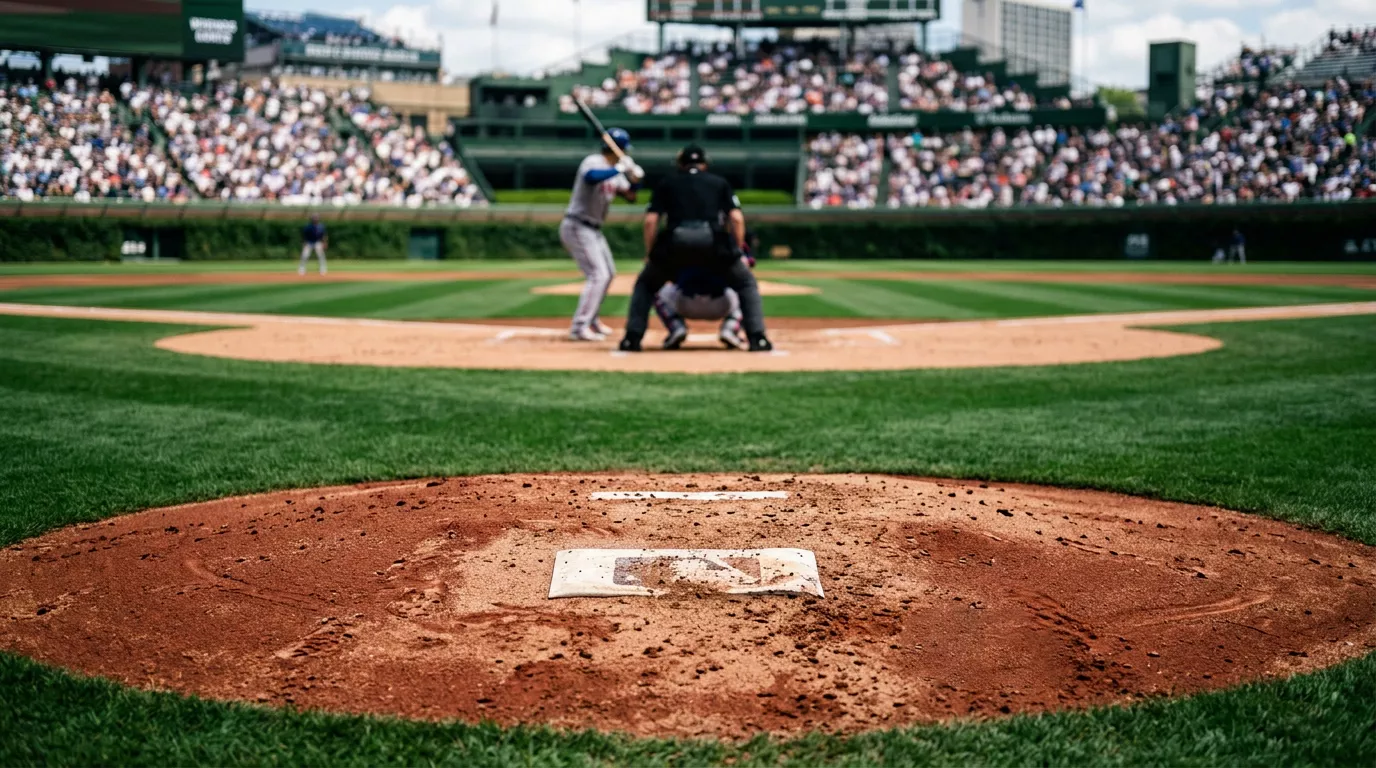
The market design problem the case exposed is structural rather than incidental. A pitcher who decides to throw the first pitch of an at-bat outside the strike zone has near-perfect control over the settlement of a first-pitch-ball prop on that at-bat. The deception isn’t elaborate – it’s a single pitch deliberately delivered to a particular spot. That’s a fundamentally different integrity profile from props on full-game outcomes, where a player would need to manipulate dozens of plate appearances to materially affect the line.
UK bookmakers were less directly exposed because micro-pitch props are not standard offerings on most UK MLB books. UK MLB prop markets historically focus on full-game player statistical lines – strikeouts, hits, walks allowed, runs allowed, total bases. Those are markets where individual-pitch manipulation isn’t sufficient to move a settlement, because the line aggregates dozens of decisions across an outing.
That said, second-order effects on UK markets were real. Strikeout props, walk props, and pitcher hits-allowed lines moved into a more conservative posting regime as global integrity teams reviewed the broader prop landscape. Lines previously available at competitive vig were posted at wider margins or removed during the most active investigation period in mid-2025.
MLB’s public response
The league’s posture through the case and into the off-season was carefully calibrated. Commissioner Rob Manfred has been on record for years about the integrity tension created by MLB’s deep partnerships with sportsbooks, and his framing through 2025 echoed his earlier positions on the trade-off involved.
On the data-access piece, Manfred said: “we should make sure that the data which is the foundation for those bets is reliable, that the integrity is the highest possible level”. That’s the dimension MLB has direct control over – the league sells official data feeds to sportsbooks and integrity monitors, and the quality of that pipeline directly determines what monitors can see.
On the broader integrity posture, his framing has been that the responsibility is shared rather than league-only: “whatever the public policy is in any given state, our responsibility is to do our level best to protect the integrity of the play on the field”. The Cleveland case tested that responsibility directly, and the league’s response – public suspensions, full cooperation with federal authorities, no attempt to minimise the substance – was the closest test of the framework since the post-2018 era began.
His most pointed framing came on the existence of legalised sports betting itself: “when you have legalised sports betting, that creates an interest in the result of every single play”. That isn’t an argument for or against legalisation – it’s a description of the integrity surface. Every micro-prop creates an integrity surface scoped to a single pitch. Legalisation expands that surface. The Cleveland case is what happens when the expanded surface meets a player willing to test it.
Bookmaker changes: limits, voiding, monitoring
The operational response across regulated sportsbooks globally – UK and US alike – was rapid and largely uniform. Single-pitch and single-event prop markets were either removed entirely or posted with much lower limits, often £5-£20 maximum per bet rather than the £100+ limits that existed pre-case. Books that retained the markets layered additional integrity monitoring on top, including deeper scrutiny of accounts placing repeated bets on the same player’s first-pitch outcomes.
Voiding decisions were case-specific and varied by jurisdiction. Bets placed by accounts directly identified in the federal investigation were voided across regulated sportsbooks with stake-only refunds. Bets placed by other customers on the same markets – same games, same players – were generally honoured at settled outcomes, on the regulatory principle that ordinary customers shouldn’t be retroactively penalised for an integrity violation by other parties.
The medium-term shift visible in the 2026 prop market landscape is structural. The single-pitch market category that drove most of the 2024 micro-betting expansion is now a much smaller share of the overall prop product mix. Books rebuilt their prop offerings around full-game statistical aggregates that are harder to manipulate at the individual-pitch level. Over-the-counter retail margins on remaining single-event markets widened, partly to fund the additional monitoring required and partly to discourage the volumes that had previously made the markets attractive integrity targets.
The 2024 US legal handle of $149.8 billion gave operators the financial scale to absorb the product changes without major consumer disruption. A market this size has the resources to redesign products quickly when integrity infrastructure flags structural problems, and the Cleveland response is what that capability looks like in practice.
Lessons for UK MLB bettors
The first practical lesson for UK MLB bettors is that the 2026 prop landscape is meaningfully different from the 2024 one, and any modelling work done on prop-line distributions from the older period needs recalibration against the new posting regime. Margins are wider on the markets that survived. Some markets disappeared entirely. Closing-line value benchmarks that worked under the old regime won’t work the same way under the new one.
The second lesson is about integrity surface awareness. The 13.5 million monthly active gambling accounts in the UK at the end of 2024-25 are now operating in a market where integrity monitoring runs in the background of every prop bet, with shared alerting across operators and regulators. The post-Cleveland environment has tightened the parameters in ways regular bettors should be aware of – patterns that look unusual will be flagged faster, and account reviews will be more probing.
The third lesson is about market selection. UK MLB bettors who concentrate on full-game props – total bases, hits, RBIs – are operating on the most stable side of the post-Cleveland product mix. Bettors who were exposed to single-pitch markets that no longer exist need to migrate their edges to markets that survived. The structural advice in the MLB strikeout props piece is more relevant after Cleveland than before, because the markets that survived integrity scrutiny are exactly the ones built on multi-decision aggregates.
The integrity reset that quietly redefined the prop market
The Cleveland case won’t go down as the most dramatic MLB integrity story ever – the 1919 White Sox kept that title – but it might be the most consequential for the modern prop-betting era. The product mix we’ll model in 2026 was reshaped by what happened in 2025, and bettors who understand the reset will find edges in the rebuilt market more easily than those treating it as a continuation of the old one.
FAQ
Were Cleveland-related MLB prop bets voided in the UK?
Did the case lead to permanent prop limits in 2026?
Material created by the team DiamondLines