
Light is a price input most bettors ignore
I had a bet land on a Wednesday afternoon in May because the shadows at Yankee Stadium between 4pm and 5pm cut across the strike zone in a way I had pre-modelled. The bet was an under on a game most casual UK bettors had pegged as an over because the lineups were strong. It was not a clever pick. It was a measured input that the bookmaker had not fully priced. This article is about that input – light and visibility – and how it shifts MLB totals in ways that overlap with, but are distinct from, weather and travel fatigue.
What we are talking about here is not “day games versus night games” as a generic split. It is the specific moments where natural light interacts with the strike zone, the dome environment removes both light variables entirely, and the time of first pitch correlates with body-clock effects on the lineup. Each of those is a different mechanism. Each affects scoring. The bookmaker handles each of them with varying degrees of accuracy.
Day-game totals: traditional under lean
Day games trend toward unders, period. The mechanism is the cumulative effect of natural light on hitter visibility, slightly cooler average game-time temperatures than evening games at the same parks, and lineup composition shaped by manager rest decisions. Roughly 28% of MLB games are decided by 1 run, and that proportion is slightly elevated in day games because the scoring environment is suppressed enough to keep games tighter on average.
The 2025 MLB attendance of 71,409,421 reflects the league’s full schedule running at high volume, and within that schedule, day games still represent a meaningful slice. Saturdays in particular have multiple early-afternoon starts, and Sunday day games are the league’s traditional getaway slot. The pattern across these slots is consistent – totals come in below the listed number more often than they go over, with the under cashing at a roughly 52% to 53% clip across the broader sample.
That edge is small. After vig at -110, breaking even requires 52.4%, so a 52% to 53% raw rate is barely in the black. The bettor who bets every day-game under blindly will not be profitable. The bettor who layers other inputs – pitcher matchup, park, weather – onto the day-game baseline can find spots where the structural under lean stacks with three or four other indicators, and those layered bets are where the segment pays.
Afternoon shadows in 1pm and 4pm starts
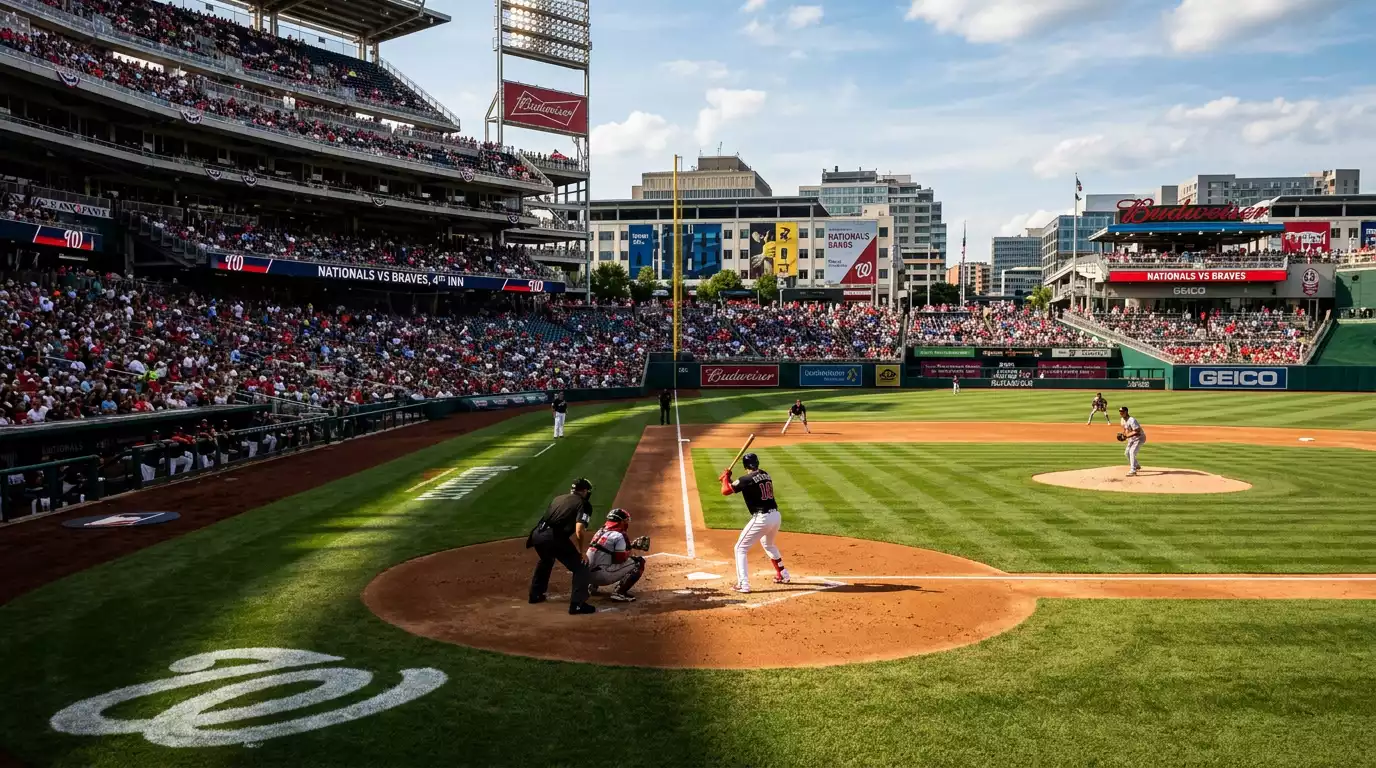
The shadows at certain ballparks during specific time slots are a measurable scoring suppressant. The classic case is Yankee Stadium between roughly 16:00 and 17:00 ET, when the upper deck shadow crosses the infield, the pitcher releases the ball from sun, and the hitter sees it travel through a shadow line. The result is reduced contact quality, more swinging strikes, and lower scoring during the shadow window.
Not every ballpark has the shadow pattern. East-facing fields and west-facing fields produce different shadow profiles. Wrigley Field has its own pattern that differs from Fenway, which differs again from Citi Field. Knowing which parks produce sharp shadow lines, and at which clock positions, is a small specific knowledge edge that pays off across a season’s worth of afternoon starts.
The 1:05pm ET start time is the textbook shadow setup. By the third inning the shadow is forming. By the fifth inning it is at its sharpest. The fourth, fifth, and sixth innings of these games produce 15% to 20% lower run-scoring than equivalent innings in night games at the same parks. Books often price these games as straight-line totals without adjusting for the inning-by-inning shadow effect, which means the under has a small but measurable structural edge in shadow-prone afternoon slots.
The 4pm ET start is the harder one to read. By first pitch the shadow is forming; by the third inning it has often passed. The shadow window is shorter, but the cumulative effect on the early innings – when starting pitchers are at peak – can suppress the first-half scoring meaningfully. First-five-innings unders in 4pm starts at shadow-prone parks have been one of my better sub-segments over recent seasons.
Where day-game and getaway-day overlap
Many day games are also getaway-day games – the third or fourth of a series, with travel to the next city scheduled for that evening. The two effects compound. A getaway-day day-game in cool early-season weather, with the home team’s lineup deploying its third- and fourth-string bench bats, is a stack of three under-leaning conditions. That stack does not show up every day, but when it does, the under has structural support beyond what the headline number suggests.
The pricing edge in this overlap comes from the fact that books price the day-game effect and the getaway-day effect independently, and they discount the total once for each. The combined effect is larger than the sum of the two individual adjustments, particularly in the third inning forward when bench rotation kicks in. Sharp money knows this; UK retail books are partial in their adjustment.
The principle worth keeping is that single-input bets are always weaker than stacked-input bets. A day-game under by itself is a 52% bet. A day-game under at a shadow-prone park with a getaway-day lineup behind a fly-ball-suppressing pitcher in cool weather might be a 56% bet. The same input – the day-game lean – is doing the work in both, but the surrounding conditions multiply the edge.
Night-game totals and the dome problem
Domes break the entire light-and-shadow framework. Tropicana Field, the Marlins’s loanDepot Park, Globe Life Field in Texas – these venues remove sun, shadow, wind, and most temperature variation from the game. They produce the most predictable scoring environments in the league, and the bookmaker prices that predictability into a tighter range. The over-under split in domes is closer to 50/50 than in any other category of MLB game.
That predictability is not edge – it is the absence of edge. If you are looking for value, domes are the worst category to focus on. The conditions are stable, the bookmaker prices them well, and the typical pricing error in dome games is small. I largely skip dome games for totals modelling and focus on moneyline and run-line plays where the pitcher and lineup matchups remain the dominant inputs.
The exception is the climate-controlled-but-not-domed park, the retractable-roof venue. Chase Field in Arizona and Globe Life can play radically differently with the roof open versus closed. The decision to open or close the roof is made about 90 minutes before first pitch and posted on team websites. UK bettors checking the morning price often miss the roof status; sharp markets adjust by 2:00pm UK time once the decision is announced. That window – between morning open and afternoon close – is where the largest pricing errors on retractable-roof games happen.
Systematic edges by start time
Pulled together, the time-of-day signal looks like this. The 1:05pm ET shadow window in eastern parks during cool months produces a structural under lean that stacks with pitcher-friendly conditions for one of the cleanest under setups the league offers. The 4pm ET start produces a first-five-innings under lean for the same reason. Standard 7pm and 8pm ET starts are neutral on light and dominated by other inputs – pitcher matchup, weather, park. Late West Coast 10pm ET starts are where attentional fatigue kicks in for casual bettors and the line is sometimes loose because the public is not watching at that hour.
The temperature interaction is unavoidable here. Day games run cooler than night games on average, particularly early-season day games in northern parks, and the temperature-driven scoring suppression compounds with the shadow effect. The 90°F-versus-50°F gap on fly-ball carry is roughly 4 to 6 feet. A 1pm April day game in Boston might play 20°F cooler than the equivalent 7pm game in July, and the cumulative scoring suppression across all those innings is substantial. For deeper context on how the temperature side of this stacks specifically with the day-game environment, my work on MLB temperature betting walks through the multipliers.
The time-of-day book that pays
The systematic edges by start time are not generators of daily picks. They are filters that turn a slate of 15 games into three or four worth pricing carefully. April day games at shadow-prone parks, May 4pm starts with cool forecasts, retractable-roof games where the roof status is moving but the price is not – these are the spots where the time-of-day input adds 2 to 4 percentage points of expected win rate to a baseline read. That is enough to keep the segment alive across a season. It is not enough to bet blind on. Discipline, layering, and prep are the difference between a 52.5% raw read and a 55% layered bet – and on baseball juice, those two and a half percentage points are everything.
Are day-game unders systematically still profitable?
Do dome games behave like night games for totals?
Material created by the team DiamondLines