
MLB live betting moves on lineup cards, not on flow
The first thing UK bettors who come to MLB from football live betting have to unlearn is the idea that “flow” matters. In football live betting, momentum and pressure can be read in real time and prices move accordingly. In MLB, there is no flow. The line moves on discrete events: a starter pulled, a lineup card swap, a weather delay, a pinch-hitter announced. Between those events, the price drifts on script.
This piece is about reading those events fast enough to act on them. It is not about gut-betting an inning because something feels right. The bettable spots are mechanical, repeatable, and tied to specific information that arrives at specific moments in the game. The discipline is the timing.
How MLB live lines are built
Live lines on MLB are generated by an algorithm that combines current score, half-inning, base-out state, and the identity of the next batter and pitcher. The algorithm is fast, but it is not all-knowing. It uses pre-game projections for hitters and pitchers and adjusts them on the fly using the current game state. When a manager makes a personnel decision the algorithm did not predict, the line stutters before it stabilises.
Most UK books are not running their own MLB live algorithm. They are taking a feed from a market-making partner and applying their own margin layer on top. So when the underlying feed updates, UK prices update, but with a delay measured in seconds and with extra juice baked in. That delay and that margin are real costs to the live bettor.
The information state is the second part. The book is reading the same lineup card you are. If you can read it faster – by following the official MLB feed or the team’s verified social channel – you can sometimes act on a confirmed pitcher change before the live line has moved to reflect it. That is the structural advantage of live betting, and it lives or dies on the seconds between event and price update.
Key triggers: pitcher pulled, weather delay, lineup swap
The three triggers I act on, in order of profitability, are pitcher pulled, weather delay, and lineup swap.
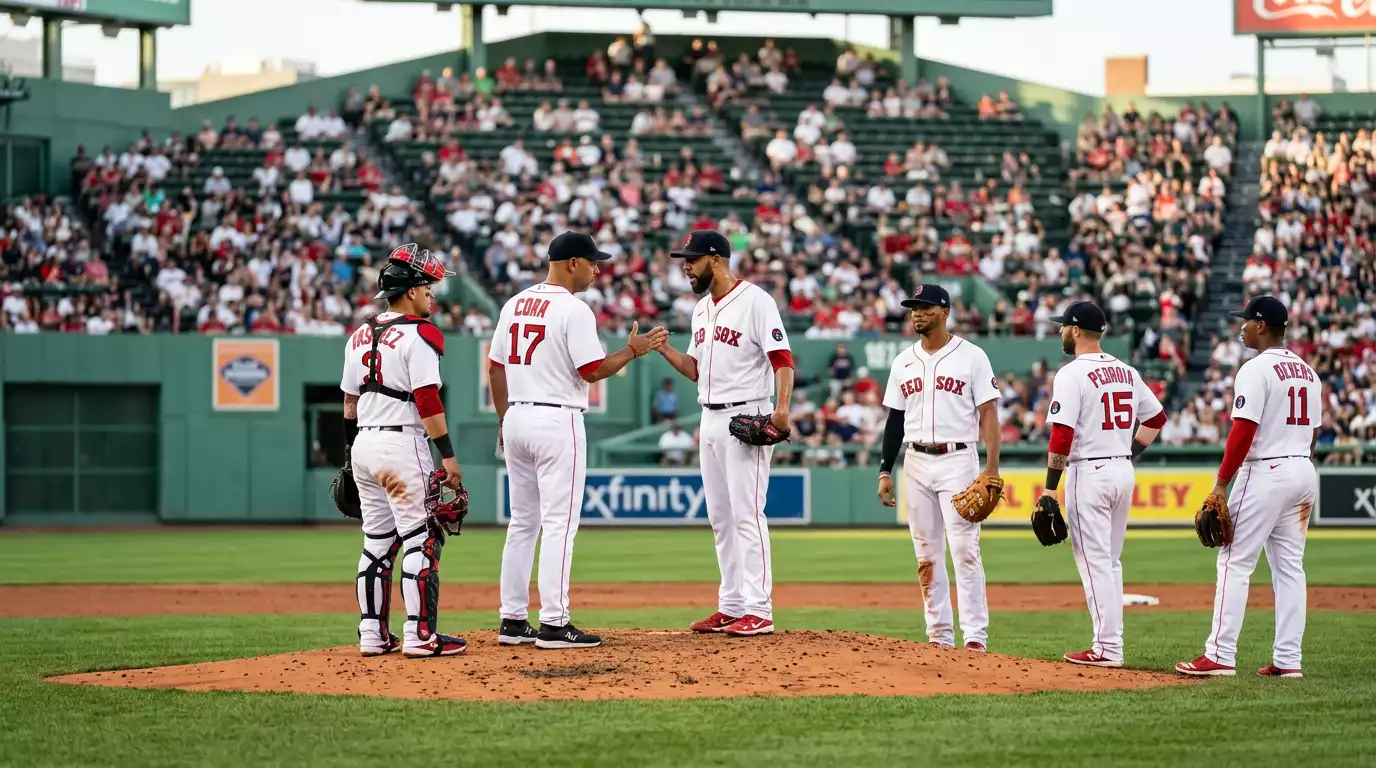
Pitcher pulled is the cleanest. A starter being lifted in the fifth or sixth inning, especially after fewer than 80 pitches, signals two things: the manager has lost confidence in the starter (information for next time) and a relief arm is about to face a higher-leverage situation than the line was built on. Live totals tend to move up, live moneylines on the trailing team tend to compress. The bettable angle is on alternate lines and on totals before the relief pitcher actually faces a batter, because once the algorithm sees the new pitcher’s projection it adjusts.
Weather delays are profitable for a different reason. ESPN’s Sunday Night Baseball averaged 1.83 million viewers per game in 2025 (+21 percent year-on-year), and other broadcast windows scaled similarly, which means a lot of casual money is in play during prime broadcasts. When a rain delay extends past 45 minutes, casual money panics, public live tickets pile in on the favourite “to win when play resumes”, and the live line on the trailing team can briefly be priced wider than its honest probability. The window is short, often under 10 minutes, but it exists.
Lineup swaps are trickier. A late scratch of a star hitter affects the team’s win probability and the run total, but the live algorithm prices it almost instantly. The exception is when the swap is announced by the team’s official channel before the live feed has updated. If you spot it first, you have a 30-second window to act before the price moves. UK readers should note that MLB.TV consumption hit a record 19.39 billion minutes in 2025, a 34 percent increase year-on-year – the streaming platform breaks lineup news fast, and most casual UK bettors are not watching it.
Live total strategy: chasing the under after the third
The most consistent live-totals angle I run is on the under after a 0-0 or 1-0 game through three innings, when both starters are commanding the strike zone and the live total has only adjusted by half a run.
The arithmetic is simple. If a 9.5 pre-game total has dropped to a 9.0 live total after three scoreless innings, the live book has only marked down 0.5 runs. The honest mark-down should be closer to 1.0 to 1.5 runs, because three scoreless innings represent meaningful evidence that both starters are pitching well and that the implied per-inning run rate has dropped. The under at 9.0 with six innings still to play is a structurally cheap ticket, especially if both starters are likely to pitch into the seventh.
The play does not work when the bullpen state on either side is poor, because the relief pitchers are about to inherit a higher run-environment than the starters created. So this is a coupled play – the live under after three scoreless is profitable when both bullpens are rested, less profitable when both are gassed, and unprofitable when one is exhausted. For a fuller treatment of the relief side of that calculation, the work I have done on MLB bullpen analysis is the natural pairing for anyone running this play live.
Latency, UK streams, and the bookmaker delay
Latency is the single most important variable in live MLB betting from the UK, and almost no public material talks about it honestly. The video stream you are watching is not the same as the data feed the book is using. The book’s data arrives via a low-latency stadium feed, often two to four seconds delayed from the actual play. Your TV stream may be 20 to 60 seconds further behind that.
UK streams, including Bases Covered Live which launched on BBC iPlayer in summer 2025 with 11 weekly live games and two postseason doubleheaders – totalling 15 high-profile matchups for UK viewers – are particularly variable on latency. Some matchups stream cleanly. Others are heavily delayed. If you are placing live bets while watching a 30-second-delayed stream, the book has had 30 seconds to update prices on events you have not seen yet. That is a structural disadvantage no margin shopping can fix.
This is the regulatory environment Andrew Rhodes captured in his ICE 2025 World Regulatory Briefing speech, “Discussions with operators are showing a widening out of the sports offering in particular, with sports beyond the traditional horseracing and football growing in use, such as cricket, basketball, NFL and a host of other US-based sports.” MLB is one of those US-based sports growing in UK live-betting volume, but the streaming infrastructure has not caught up to the trading infrastructure. The honest advice is: do not bet live on a play you just saw, because the book has already seen it and updated. Bet live on information that has not yet propagated – confirmed lineup changes, post-delay restart pricing, or your own pre-game read on which spots are likely to mature.
Cash-out vs new live bet: not the same decision
Cash-out is offered by every UK retail operator on most live MLB markets, and most casual bettors treat it as a kind of hedge. It is not. Cash-out is a margin product. The book offers you a number that is the implied probability of your bet winning, minus a slice for them, and you accept or decline. The slice they take on cash-out is almost always larger than the slice they took on the original bet, because cash-out is a single-sided trade with the book in control of the price.
The cleaner alternative, when you want to lock something in mid-game, is to place a new live bet on the opposite side, at exchange or at a competing operator if available, rather than accepting the home book’s cash-out. The math is harder – you have to size the new bet against your original – but the margin you save is real, often two to four percent of the cash-out value.
The single legitimate use of cash-out in MLB live betting is small, partial cash-out on a futures ticket where the spread between the cash-out offer and the math-honest hedge is small. For most regular MLB tickets, the new-live-bet alternative is structurally better, and the reason most casual UK bettors do not use it is that it requires more screen time and more arithmetic than tapping a single button.
What live betting actually rewards
Live MLB betting rewards three things and punishes everything else. It rewards reading lineup cards faster than the algorithm. It rewards understanding bullpen state before the relief pitcher takes the mound. It rewards pre-positioning your live plan before the game starts. It punishes gut bets, late-stream guessing, and tap-to-cash-out reflex hedging. Build the discipline, accept that the latency battle is real, and treat live as a supplementary edge – not the main event of your MLB betting week.
Does the UK live stream lag behind the bookmaker's live odds?
When does live betting beat pre-game pricing on MLB?
Material created by the team DiamondLines